

The third Iwa monthly update
[STONKS: The Staircase of Progress]
July 2026
*For mobile users: This post is best viewed in Desktop mode*
In this Monthly Update:
Workflow optimization (*exciting…*)
Feedback saves games
Motivation via validation
SPHEROCIOUS playtesting phase within sight
TL;DR:
There is nearly always a more efficient way to organize your projects, but once you reach a certain threshold, your working pace will be great
Putting your idea out into the world for feedback is really challenging but can make the difference between an unsuccessful & a successful project
Sharing pieces of your work every week is an excellent way to keep inspired, especially if it gets helpful responses (and results in increased wishlists)
It genuinely feels like SPHEROCIOUS almostttt is ready for its first playtesting phase
1. Efficiency sets you free

Ask a bunch of people how they’d organize a complex project and you’ll likely receive the same amount of wildly different answers.
When you browse YouTube videos, reddit forums, Discord servers and other platforms where game designers like to share their ideas, you’ll almost certainly find some people with strongly-held opinions on what is “the best” way to code, which tools/assets/software you “should be using,” and how “professionals” market their games. Honestly though, I think it’s important to remember that game design is an art. And in the realm of art, do rules truly exist? Well, I guess it kind of hinges on what sort of lens you look at your game projects through: are we talking on the pure capitalist business side or the open wilds of the artistic field?

Either way, I think any logical person would agree that efficiency is key to keeping pretty much any kind of work fun and satisfying. That’s one of the reasons I’ve been trying to improve at how I build systems in my projects on an ongoing basis. I think you have to learn how you like to work on your games according to how your brain works. The more you understand yourself and your thought processes, the more you’ll be able to customize your workflow to suit yourself and thus the more efficient you will be. I’m aware that for myself, I’m an extremely visual person with what according to some information I’ve read online indications of possibly having hyperphantasia (the ability to create extremely vivid imaginary imagery). Interestingly, one resource I read says that occupational survey data indicates an association between hyperphantasia and creative professions. I’ve always felt drawn towards creativity, and that’s one of the reasons I felt a lot of the jobs I tried before finding game design weren’t truly suited to my personality — though I am grateful for what I learned from those work experiences. Along with that, the MBTI model suggests I have an INTJ personality type, one said to have a propensity for game design (see Career Paths).
So how can one keep their projects organized with such a busy brain? The backbone of my programming and design systems is modularity.
[NERD MODE ACTIVATED] > I really like the idea of stacking and calling functions like LEGO pieces to perform more complex actions. For instance, I recently threw together a brief cinematic scene that takes place in the early stages of SPHEROCIOUS where the sloth meets its drone companion almost entirely through a modular, visual system. Check out a piece of it…
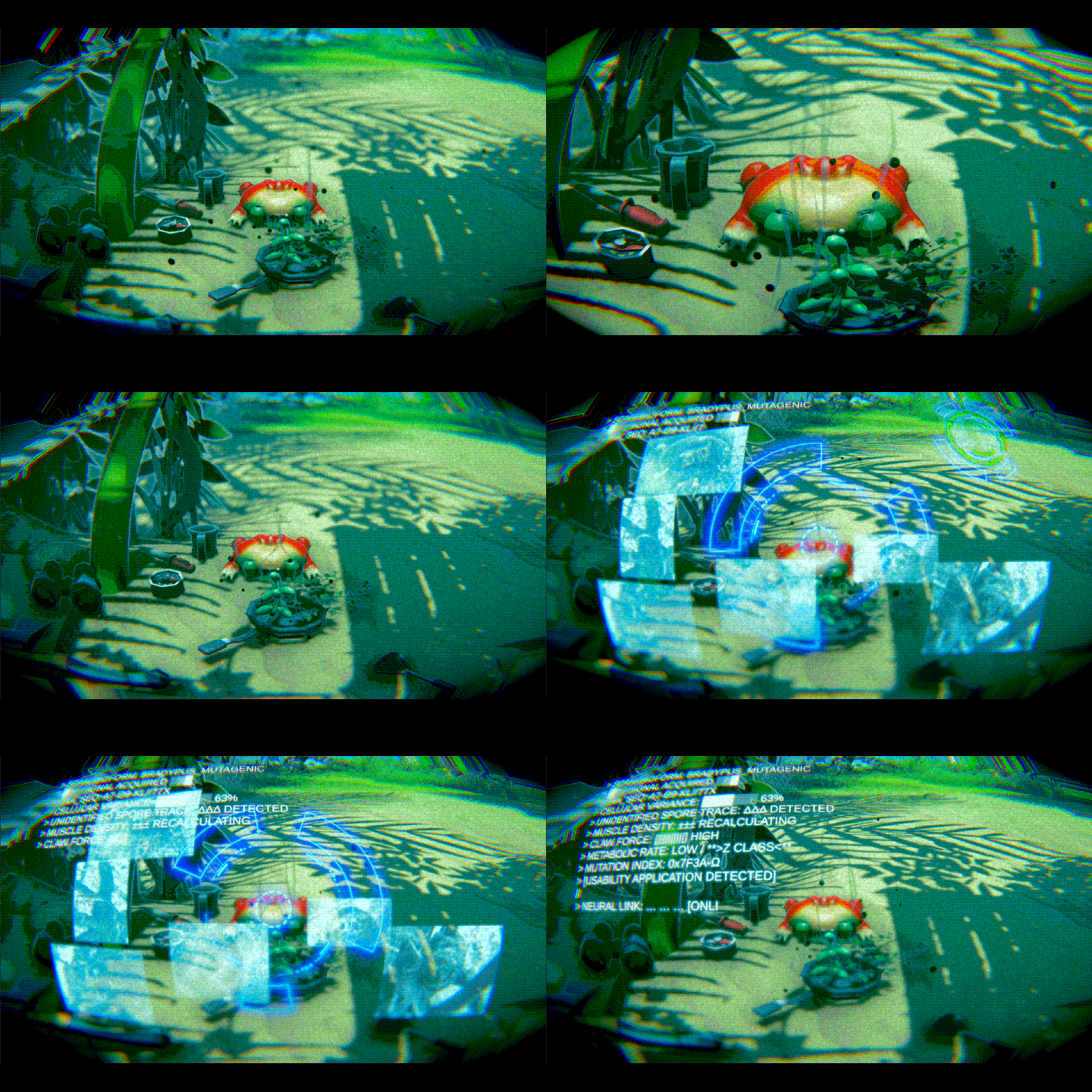
I often recall cinematic quirks from games that deeply inspired the young me like those from the Pikmin & Donkey Kong series, amongst others. I think you’ll definitely see the influence if you try SPHEROCIOUS.
2: The ultra-important playtest > feedback cycle
Speaking of trying SPHEROCIOUS, I’m really happy to say that it’s approaching the playtesting-ready stage at a solid pace. Adding ambient sound effects has really brought the jungle to life. As of the time of writing, the introduction/”tutorial” portion of the game basically is complete.
The game starts the sloth with simple, limited crawling and climbing and teaches the inflation and jumping abilities later on, so it took a lot of work to figure out how to build engaging interactions in the early game.
One of the most exciting aspects of this is that I will be able to make a better game with help from people like you. User testing is such a crucial piece of the puzzle for a successful game.
“Oh, hi. Since we’re here,
Fun Fact: I’ve done user testing freelance work for a wide range of companies. Through this work, I learned that sometimes what seems blatantly obvious to a user might take a significant amount of time for a company to realize.”
But before launching the playtesting phase, I really want to ensure the Steam store page looks good. How, though?
Feedback literally saves games. And Steam pages.
If you’re working on a game project currently, I strongly suggest asking people for feedback. Some feedback causes pain, yes. But if you keep going and filtering through the feedback, you’ll progress. And remember, progress usually looks more like a stock chart or a staircase than a straight line.
For those who actually read this, a hidden gem: pertaining to stocks, also called “STONKS” on the net by meme aficionados, there is a hilarious music video on YouTube a game design teacher once produced which deserves way more attention in my opinion. Up to this point, I’m assuming that my personal views account for approximately 50% of the total video view count. Let’s change that by showing said video the attention it so rightfully deserves.
In June, I posted some reddit posts asking for feedback from other developers about the aesthetic of SPHEROCIOUS and its Steam store page. I got some incredibly helpful advice from a variety of people, and one reddit user (@Sharain3) even kindly started giving me candid, ongoing advice about the Steam store page while I refined and updated it multiple times. I’m way happier with how it looks compared to before asking about it. By the way, she also recently started her own YouTube account focused on playtesting & feedback, which I suggest checking out!
Additionally, I recently added some cinematic GIFs to the “About This Game” section in June.
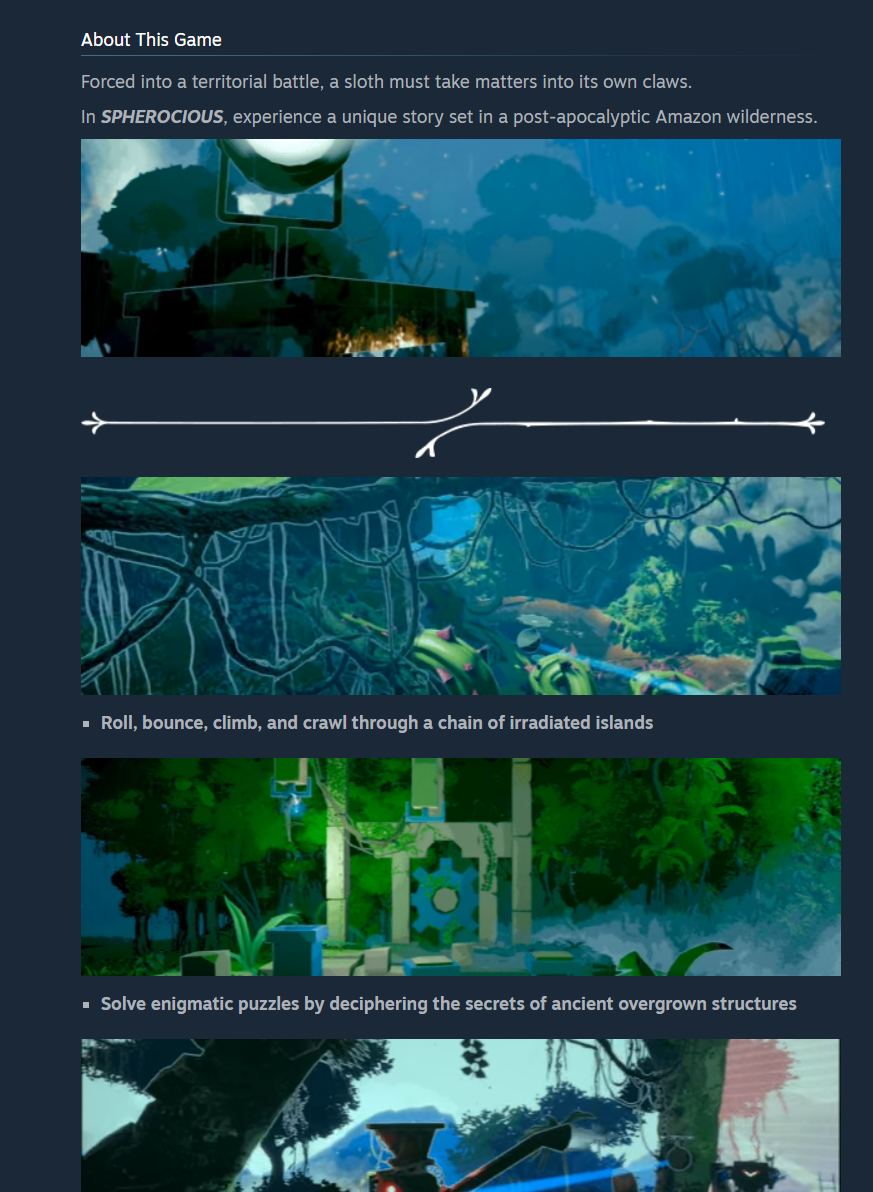
You can see them in their full GIF glory on the SPHEROCIOUS Steam page.
What do you think? I feel like it enhances the atmosphere and presentation of the entire page.
When playtesting is fully ready, I’m planning to unlock testing in phases. This comes back to what I wrote about already in this post — leveraging and adapting your approach based on self awareness of how your brain works. I would surmise that getting intense feedback from random people right at the first playtest likely isn’t the best option, so the first playtesting phase will likely be released to a very limited selection of players whom I trust and have spoken with for a while prior to the playtesting. I want to collect feedback from them, refine the project based on that, then release an updated version of the playtesting file to a bigger group of players, progressing from very private to very public, essentially. I think this will allow me to receive feedback in a way that will be productive, rather than getting a pile of messy feedback from an overwhelming group of random people right on the first playtest.
If you are working on any creative project, one piece of advice I recently learned is to share your work often — even weekly — to satisfy your brain’s desire for seeing tangible results for your efforts. This creates intrinsic motivation/determination and keeps the creative drive going. Let’s illustrate: Suppose you had a communications device and were lost in the wilderness. The device requires a full strength signal to allow a phone call. If you attempted to find a signal for the device, but the device’s interface displayed signal strength in a binary fashion (either 0 or 1), you’d probably feel a lot differently about the search for signal than if the device displayed a meter that gave you indication (feedback) that you were reaching an area that has good reception. The meter gives “breadcrumbs” — evidence that you are on the right path and that your search is worthwhile.
For July, a goal of mine is to get a huge chunk of level design built out and possibly get the first playtest rounds going. I would ideally like to join the October 2026 Steam Next Fest, and registration is open until September 1st. That would give me several months of time to work on playtesting beforehand. Next Fest is a huge deal, and I’d want to ensure the game has already gained a good amount of wishlists before joining it. This would also be in line with my personal goal of launching the game before 2027. I really want to get Purrfect Fit shipped in 2027, so I’m going to be very cognizant of project scope from here on.
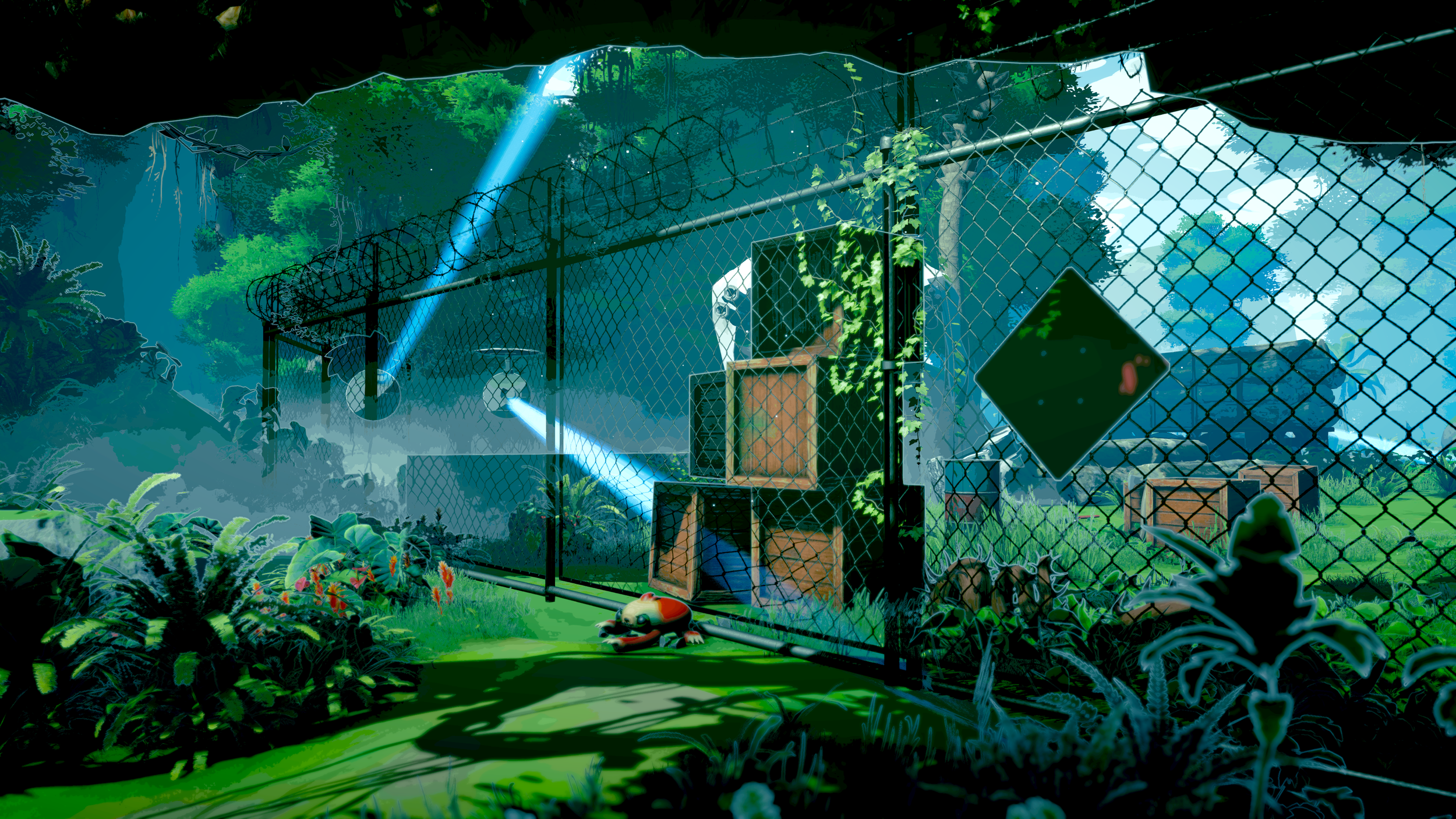
The story of SPHEROCIOUS has experienced some changes over time, but the original key story remains mostly intact:
A mutant sloth versus a shady logging company in a post-apocalyptic Amazon archipelago.
If you want to join the SPHEROCIOUS playtesting list, you can join my Discord server and find “Playtesting” on the left side/server navigation list.
Got feature requests? Email or message me!

(By the way, if you’re a fan of the original Donkey Kong Country series, you’ll find this fan project amazing.)
I hope you enjoyed the July 2026 update.
Thank you all for your ongoing support!
// Nathan AKA Mister Iwa